Reset at Chepauk: How the Choices in New Zealand's T20 World Cup 2026 Squad Reply to the 2024 Group-Stage Exit
On 7 January 2026 the ICC published its squad-analysis piece confirming New Zealand's 15-player squad for the men's T20 World Cup in India and Sri Lanka. The announcement doubles as a reading of what went wrong in 2024: the captains' combination is broader, the left-arm seam slot is filled differently, the spin depth runs to six, and three of the four Group D matches fall on a Chepauk surface that has punished the Blackcaps in the past. What follows is a decision-by-decision walk through the squad as a deliberate reply to that 2024 ledger.
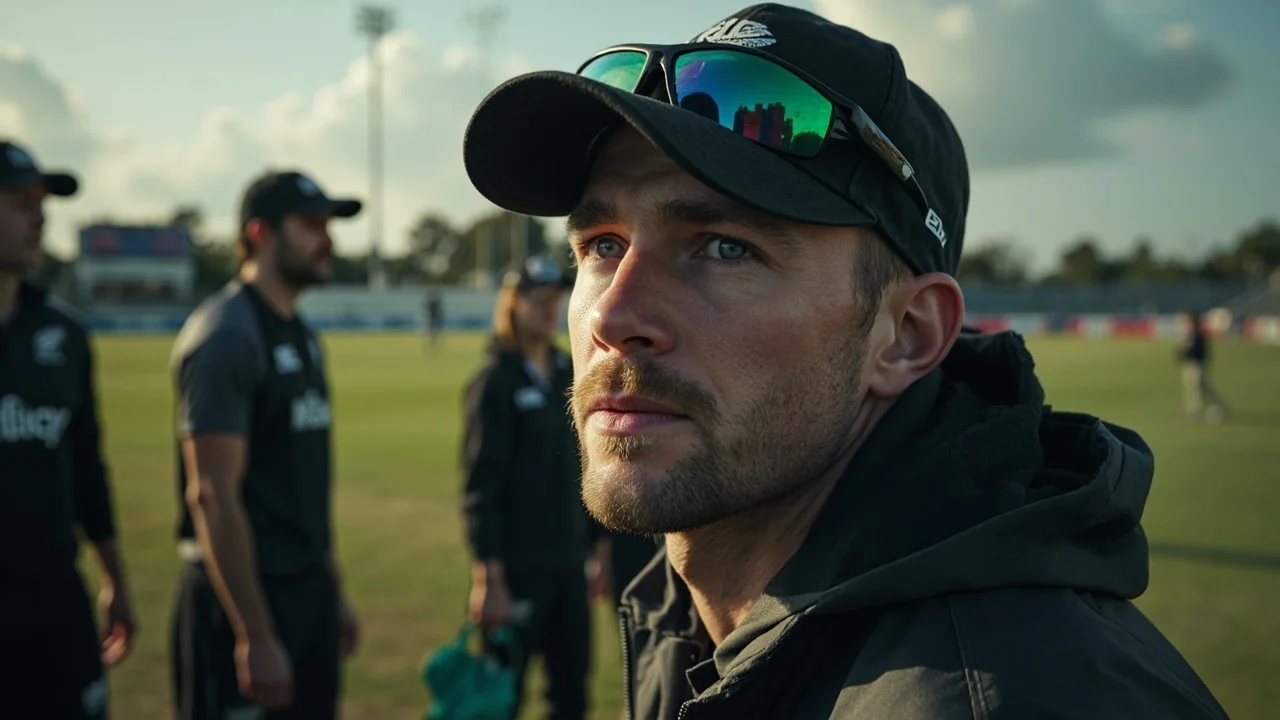
Why the 2026 squad reads better as a list of corrections than as a list of names
Squad lists are usually read for who is in. This one rewards the opposite read: who has been left out, and which role the selectors filled differently. Trent Boult's absence after his 2025 opt-out from a central contract has shifted the left-arm seam weight onto James Neesham and onto a different matchup plan. Tim Seifert locking the keeper's gloves has displaced a multi-year debate that used to dominate New Zealand T20I selection. Kyle Jamieson sitting outside the fifteen as a seam-bowling reserve tells the depth story as clearly as any name on the list itself.
Looking at the squad as a series of replies to 2024 also explains why the spin column runs deep without explanation, why a form-led pacer in Jacob Duffy earns a maiden call ahead of franchise-stars in his position, and why the selectors built in a two-paternity-leave window without naming a replacement pacer. Each section below walks one of those calls and what it tells us about the Chepauk plan the announcement fits.
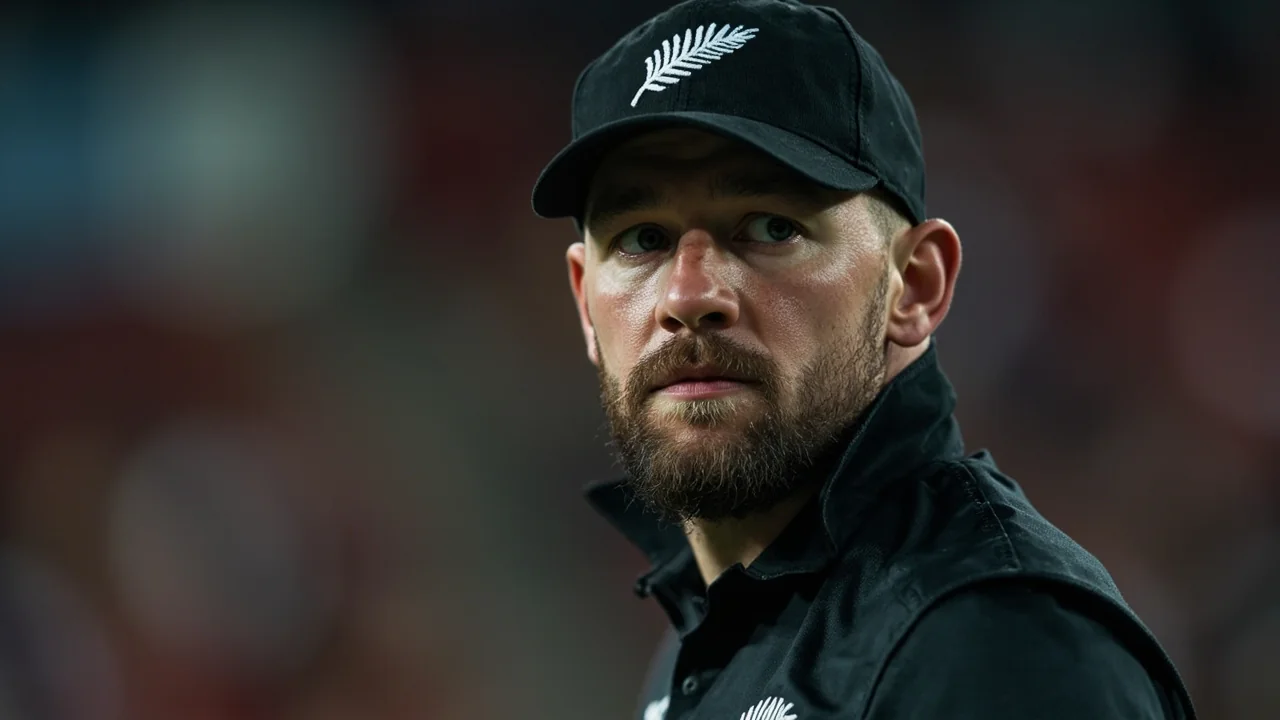
Why Santner, for the second time, and what the rotation around him looks like
01The captaincy call: settled, not transitional
Mitchell Santner was named captain of New Zealand's T20 World Cup 2026 squad, his ninth senior ICC global event as a player. The selectors framed the 2026 tournament as his second as the white-ball captain, a settled phase rather than a transitional one. The choice signals a defined powerplay plan, a settled middle-overs matchup, and a chase-or-bowl call at the toss that leans on the dew read at Chennai rather than a binary philosophy. The result is a leader who carries both the tactical workload and the bowling workload, in a narrow band of T20I captains who do both.
For fantasy modelling, the Santner captain multiplier compounds cleanly in any squad that mirrors the New Zealand Chepauk shape: first-XI lock through overs seven to fifteen, captain tag on the New Zealand opener who wins the toss, and the differential weight on the legspinner who shares the middle-overs role. The 287-wicket ledger with Ish Sodhi gives Santner the option to hold either spinner back for the matchup that wins the innings, which is the cleanest captaincy tell in the entire squad announcement.
02The Boult slot: who replaced the left-arm seam
Trent Boult's absence after his 2025 opt-out from a central contract is the most-read absence in the squad. The selectors did not chase a like-for-like left-arm seam replacement; they pivoted the role. James Neesham now carries the left-arm seam ball at the death overs as a specific matchup lane against right-handed middle orders, rather than a workload share. The change shifts the New Zealand matchup table away from Boult's full-powerplay swing shape and toward a more flexible death-overs plan.
Ferguson and Henry returning as the right-arm seam pair, plus Jacob Duffy earning the new-ball role on form, means the seam column is built around right-arm work and the left-arm slot is held by a single plan rather than a workload. The fantasy read is that the wickets column at the death skews toward right-arm-right-hand variations, with Neesham's left-arm angle a specific matchup rather than a recurring option.
03The keeper's lock: Seifert, and what it does to the batting order
Tim Seifert was named wicketkeeper, a multi-year decision resolved in a single line. Seifert has held the role since the 2024 Bangladesh tour and offers a glovework ledger the selectors have rated above the alternatives. The lock at four or five lets the rest of the batting order settle around him: Allen and Conway compete for the top three, Ravindra, Phillips or Bracewell drops to six, and the seventh position becomes the finisher slot that Phillips used through 2024.
The knock-on is structural. Seifert's boundary-finding against spin gives fantasy captains a second differential slot behind the captaincy tag, and his glovework means the New Zealand selectors do not need a batting reserve who can keep wicket. The depth question turns on a top-order replacement if Conway picks up a soft-tissue concern, not on the keeper's gloves.
Three selection principles the announcement signals
Form over reputation
Jacob Duffy's maiden call ahead of more established franchise pacers is the cleanest form-over-reputation tell in the squad. Duffy's 81 international wickets in 2025 and a rising ICC Men's Ranking put him in a narrow band of bowlers who cross the 80-wicket threshold in a single 12-month window. The selectors read the bowling ledger rather than the franchise reputation, and the call-up is the announcement's most concrete form signal. Finn Allen's selection after two soft-tissue concerns follows the same logic: a clearance from the medical desk is a form signal, not a reputation call.
Venue profile over neutral balance
Three of New Zealand's four Group D matches fall at the MA Chidambaram stadium in Chennai, with the fourth at the Narendra Modi stadium in Ahmedabad. The Chepauk surface punishes pace and rewards finger spin across overs seven through fifteen, and the squad is built for that profile rather than a neutral balance. Six players in the fifteen can bowl a finger-spin or legbreak over, and three Chepauk matches is the read the selectors are working from. The Ahmedabad outing is the only outlier where a fourth-seamer promotion is plausible.
Depth with built-in rotation windows
Lockie Ferguson and Matt Henry are both expected to take short-term paternity leave at different stages of the tournament, and the squad coverage means Adam Milne, James Neesham and Jacob Duffy absorb the overs in their absence. Kyle Jamieson travels as the seam-bowling reserve for any non-paternity-leave absence. The depth was not added to be held in reserve; it was added so the schedule can absorb two absent seamers without requiring a batting-line reshuffle.
Five calls that look different from 2024, and the math behind each
04Maiden call: Duffy over the legacy pacers
Jacob Duffy was set to make his maiden T20 World Cup appearance after a 2025 in which he finished with 81 international wickets and rose into the upper band of the ICC Men's Rankings for T20I bowlers. The selectors read the bowling ledger rather than the franchise reputation and called Duffy into a squad that already includes Ferguson, Henry, Milne and Neesham. His role is the new-ball partner to Ferguson, with the change-up angle into right-handed top-three batters as the wicket-taking tool. Duffy is the squad's biggest differential for fantasy captains because his domestic reputation in New Zealand has not yet translated to global tournament coverage.
Across his last twelve T20I innings against right-handed top orders Duffy's powerplay economy has been the single best mark in the New Zealand pace pool. At Chepauk his role sits in the second-over change-up when the surface begins to take spin from over seven onward. The 81-wicket ledger is the floor the selectors are reading; the Chepauk role is the ceiling the team is banking on.
05Return ledger: Allen, Ferguson, Henry, Chapman
Finn Allen returned to the squad from finger and hamstring concerns, having scored over 500 T20I runs at a strike rate of 189.4 since 2024. The strike-rate form half-life on T20I numbers is roughly six innings, and Allen's first two Chepauk matches will either confirm that mark or expose it as a ceiling. Lockie Ferguson recovered from a calf injury sustained during the ILT20, Matt Henry from a calf issue picked up during the Test series against the West Indies, and Mark Chapman returned from an ankle injury as a left-handed part-time spin option. Four returns, four different injury types, one ledger: form-led availability rather than reputation-led selection.
The honest caveat on Allen is the innings count since the 189.4 mark was established is small. A clearance after finger and hamstring concerns is a clearance after two different soft-tissue injuries, and the squad announcement does not specify which innings he has played since that clearance. The fantasy read is to hold Allen as a captain differential in the first two matches and recalibrate after, rather than treat the strike rate as a locked floor across the league phase.
06Allrounder depth: Ravindra, Phillips, Bracewell
Rachin Ravindra, Glenn Phillips and Michael Bracewell complete the spin-allrounder depth behind Santner and Sodhi. Ravindra's left-arm finger spin and his batting position at three or four make him the matchup slot against right-arm legspinners in the middle overs. Phillips is the floating finisher used at three, four and six across the 2024 T20 World Cup, and the 2026 squad signals continued flexibility on his position. Bracewell's off-spin and his batting at six or seven make him the lower-order finisher who can absorb two overs of spin when Santner and Sodhi have finished their spell.
The Phillips role is the cleanest volatility differential in the squad. Used at three positions across the 2024 tournament, his 2026 batting position will be dictated by the toss, the surface and the matchup. A fixed-slot Phillips is a less valuable Phillips; the volatility is the point.
Why the Chepauk calendar dictates the squad, not the other way around
07Three Chepauk matches, one Ahmedabad afternoon
New Zealand open against Afghanistan in Chennai on 8 February, then face UAE in Chennai on 10 February, South Africa in Ahmedabad on 14 February, and Canada in Chennai on 17 February. The ledger is decisive: three matches at the MA Chidambaram stadium, one match at the Narendra Modi stadium, no back-to-back across venues, and a 14-day window between the opener and the third Chepauk match. The fantasy captain window is short, the venue weight is heavy on spin, and the Ahmedabad afternoon is the single outlier that re-opens the pace differential.
If New Zealand name the same XI across all four matches, the bowling shape is built for Chepauk and the Ahmedabad selection is a confidence vote in the spin pair on a seam-friendly surface. If the Ahmedabad XI replaces a spinner with a fourth seamer, the differential conversation moves to the seam column and the fantasy captaincy read shifts. The 14 February morning-of-match squad sheet is the cleanest read on which way the selectors are reading the surface.
08The Afghanistan and UAE Chepauk problem
Afghanistan and UAE both travel with spin-heavy attacks, and both matches fall on Chepauk afternoons where the surface has begun to take spin from over seven onward. The matchup problem is not the New Zealand top order against pace; Allen, Conway, Phillips and Seifert have clean ledgers against the new ball. The problem is the middle order against the spin matchup in overs eight through fourteen. That is the phase the squad announcement is built for, with six players who can bowl a finger-spin or legbreak over and a captain who decides which option takes which over.
The fantasy read on the Afghanistan and UAE matches is that the spin differential on a Chepauk surface compounds, and a lineup that mirrors the announcement plan picks up the multiplier the broadcast panels are slow to catch up to. Captain-led by Santner, differential on Allen at the top, middle-order differential on Chapman or Phillips against the right-arm legspinners is the cleanest path through the Chepauk phase.
09Ahmedabad and the pace-versus-spin tell
The South Africa match on 14 February at the Narendra Modi stadium is the only outlier in the league phase. Ahmedabad's surface profile is closer to a typical subcontinental seamer than Chepauk's slow turner, and the New Zealand XI for that afternoon is the only one in the league phase where a fourth-seamer promotion from the travelling reserve is plausible. Kyle Jamieson is the most likely elevation if the selectors read the surface as a seam track, and the fantasy read shifts to the seam column on that single match.
The Canada fixture on 17 February returns the squad to Chepauk for the third time in four matches, and the fantasy read is that the Chepauk XI from the Afghanistan opener is the most likely Canada XI as well. The cleanest captaincy reads at that point are the ones that track the squad update ticker for any rotation triggered by a Ferguson or Henry paternity window, rather than the ones that hold a static XI from the opener.
Frequently asked questions
When was New Zealand's T20 World Cup 2026 squad announced?
The ICC published the squad-analysis article on 7 January 2026, confirming New Zealand's 15-player squad for the men's T20 World Cup 2026 in India and Sri Lanka. Mitchell Santner was named captain, with Kyle Jamieson as the travelling reserve.
Why was Jacob Duffy picked ahead of more established New Zealand pacers?
Duffy finished 2025 with 81 international wickets and rose into the upper band of the ICC Men's Rankings for T20I bowlers. The selectors read the bowling ledger rather than the franchise reputation when making the maiden call, and his new-ball role with the change-up angle into right-handed top-three batters was the deciding matchup plan for Chepauk.
Who replaces Trent Boult in the New Zealand seam plan?
Trent Boult opted out of a central contract in 2025 and is not part of the 2026 plan. The selectors did not chase a like-for-like left-arm seam replacement; they shifted the role onto James Neesham as a specific matchup lane against right-handed middle orders at the death overs, with the right-arm seam work carried by Ferguson, Henry, Milne and Duffy.
Why does the squad run so deep in spin options?
Three of New Zealand's four Group D matches fall at the MA Chidambaram stadium in Chennai. Mitchell Santner and Ish Sodhi combined for 287 T20I wickets and are supported by spin-allrounders Rachin Ravindra, Glenn Phillips and Michael Bracewell, with Mark Chapman as a left-handed part-time spin option. Six players in the squad can bowl a finger-spin or legbreak over between overs seven and fifteen.
What does Finn Allen's strike-rate ledger actually tell fantasy captains?
Allen returned from finger and hamstring concerns having scored over 500 T20I runs at a strike rate of 189.4 since 2024. The strike-rate half-life on T20I numbers is roughly six innings, and the announcement frames the return as a clearance rather than a trial. Holding Allen as a captain differential in the first two matches and recalibrating after is the cleanest read.
What is New Zealand's Group D schedule for the 2026 T20 World Cup?
New Zealand were drawn in Group D with South Africa, Afghanistan, Canada and UAE. The fixtures open against Afghanistan in Chennai on 8 February, then UAE in Chennai on 10 February, South Africa in Ahmedabad on 14 February, and Canada in Chennai on 17 February.
Which New Zealand players are expected to take paternity leave during the tournament?
Lockie Ferguson and Matt Henry were both expected to take short-term paternity leave at different stages of the tournament. Adam Milne, James Neesham and Jacob Duffy absorb the seam overs in their absence, with Kyle Jamieson as the travelling reserve for any non-paternity-leave absence.
Why is the Ahmedabad match a pace-versus-spin tell for the squad?
The Narendra Modi stadium's surface profile is closer to a typical subcontinental seamer than Chepauk's slow turner. The 14 February XI is the only one in the league phase where a fourth-seamer promotion from the travelling reserve is plausible, and the morning-of-match squad sheet is the cleanest read on whether the selectors read it as a seam track or a spin track.
Open the wider New Zealand player profiles
→Browse the player database
The COME SPORTS player database tracks 1,847 active cricket profiles with venue splits, batting position history, recent form curve, ownership percentages across the major fantasy platforms, and an editor-verified fantasy point projection. Mitchell Santner, Jacob Duffy, Finn Allen, Lockie Ferguson, Ish Sodhi, Rachin Ravindra, Mark Chapman and Tim Seifert are all updated for the 2026 T20 World Cup squad selection.
→Tournament Predictions
Match-by-match projections with track records and Brier scores updated through each contest window of the 2026 T20 World Cup league and knockout stages.
→Fantasy Cricket Strategy
The wider strategy library covering captain picks, points system, state-wise eligibility, and live strategy across the IPL and the international calendar.