What Most Coverage Misses About Reading Cricket Player News Cycles
A player news cycle is not one story. It is a chain of beats — injury return, form shift, milestone, selection call, squad update — and the most common fantasy mistake is treating those beats as if they were the same kind of news. They are not. Each beat moves on a different clock, rests on a different kind of evidence, and produces a different captaincy read. The pages below lay out the framework the editorial desk uses to separate signal from noise when a name everyone follows moves one rung in either direction.
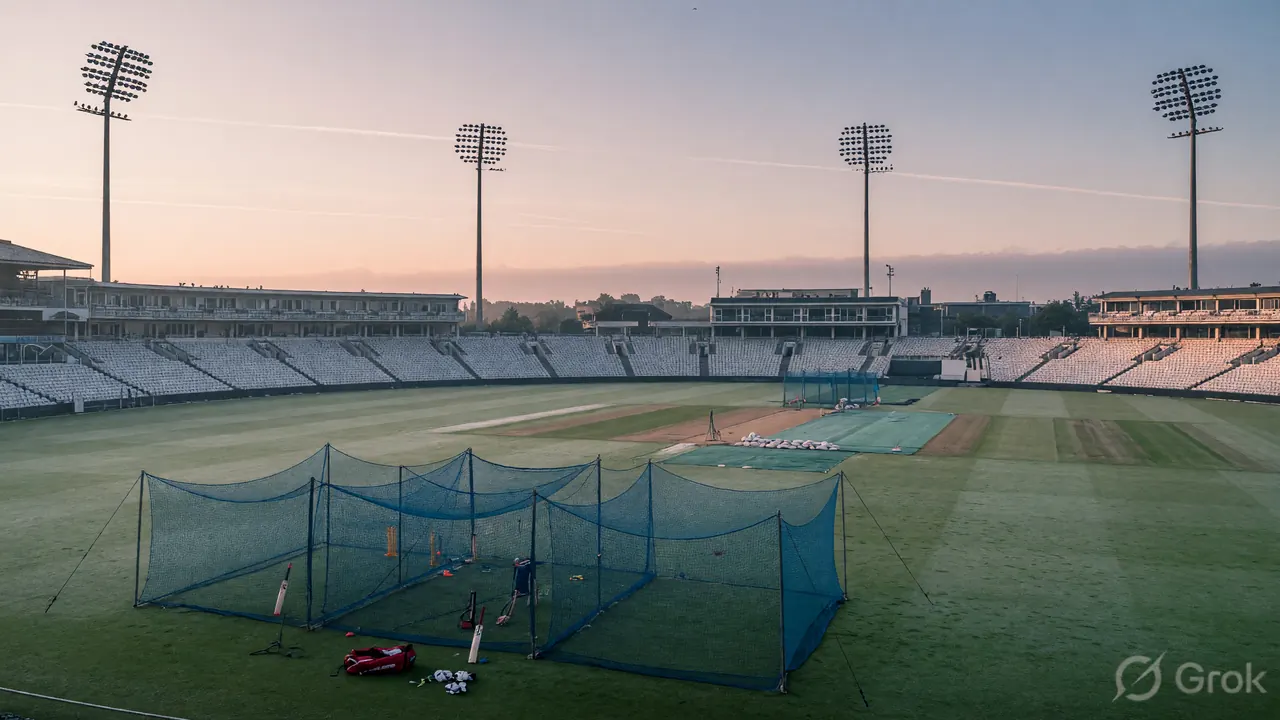
The news cycle is the player story most readers misread
Player coverage has always been the easiest cricket beat to write and the hardest beat to read. The headline is short, the social post is short, the broadcast clip is short, and the temptation is to treat each item as a verdict on a player’s fantasy value. That temptation is the source of the misread. A headline saying a bowler has been “rested for the next match” tells the reader one thing; what it tells the captaincy ledger is something else, and the gap between those two reads is where the fantasy edge lives or dies.
The framework below separates the beats. Injury returns move on a small-sample clock and rest on medical clearance. Form shifts move on a rolling window and rest on the last six or eight innings. Milestones move once and rest on the role the player occupies rather than the headline number. Squad announcements move forward and rest on role allocation rather than individual merit. Reading those clocks separately is what separates a captaincy read that holds across a tournament window from one that collapses after the first match.

Four signals every cricket player update actually carries
01Injury return
An injury return is a clearance event. A medical desk has signed the player off, the squad has recalled them, and the first one or two completed innings are the only honest sample the reader gets before deciding whether the clearance holds. The clock is small and the floor is the medical opinion, not the form ledger. A clearance after a soft-tissue concern is a clearance from one specific concern; it is not a guarantee against the next one, and the captaincy read should reflect that.
The mistake readers make is to read the return as a form floor. It is not. The first innings back often runs below the player’s career mark because match rhythm and timing live in a different part of the body from the healed tissue. Patience is part of the skill.
02Form shift
A form shift is a rolling statistical signal. The half-life on T20I form is roughly six innings; on Test form it is closer to eight or ten; on ODI form it sits between the two. The beat that matters is the change in trend across that window, not the headline number from the latest innings. A batter who scores 40 in his last innings after a quiet month is not necessarily back; the trend is the read, the innings is the data point.
Form shifts are also the beat that travels worst across formats. A Test shift does not transfer cleanly into T20 captaincy, and a T20 shift does not transfer cleanly into Test captaincy. Reading them on the same ledger produces an inflated edge in both directions, and the captaincy read tends to wash out across a tournament window.
03Milestone
A milestone is a single beat that resolves once. A batter crossing a run threshold that locks in a batting position is a real beat because the role has changed. A bowler crossing a wicket threshold that does not change role is editorial colour; it does not change the captaincy read. The test is whether the milestone moves the player from one role to another in the team sheet, not whether it crosses an arbitrary round number.
Reading milestones this way keeps the news cycle compact. When a milestone does not move the player between roles, it is a footnote. When it does, it is a read on its own, and the next two or three matches are the only honest sample for whether the role change holds in the team’s selection math.
04Selection and squad call
A selection or squad call is a forward-looking statement about role allocation. Selectors choose for matchup and surface, not for career-best form. A benching is rarely a downgrade of the player’s ability; it is usually a downgrade of the surface fit or the matchup plan. Reading a squad call as a verdict on the player rather than on the role inverts the evidence and produces a captaincy read that ages badly.
The honest read on a squad call is to ask what role the selectors have moved the player into, which matchups that role is built for, and which surface profile the role favours. The answer usually sits one rung below the headline, and the captaincy read follows the role rather than the verdict.
How each beat reads on the same page
| Beat | Clock | Evidence base | Captaincy read |
|---|---|---|---|
| Injury return | Small sample; one or two innings after clearance | Medical clearance, role sheet, surface fit | Hold as differential for one or two matches, then recalibrate |
| Form shift | Rolling window; six to ten innings | Last six to ten innings, matchup-adjusted | Treat the trend as the read; the latest innings is data, not verdict |
| Milestone | One beat; resolves once | Role change in the team sheet, not the round number | Read only when the milestone moves the player between roles |
| Selection / squad call | Forward-looking; covers the next fixture block | Selector’s role allocation and surface read | Follow the role, not the verdict on the player |
Hypothetical windows shown for illustration; the actual sample size for any given beat depends on the format, the surface profile, and the role the selectors have moved the player into.
Three common mistakes when reading a cricket player news cycle
Treating the headline as the verdict
The headline is the most compressed piece of evidence the reader sees and the least reliable. A bowler “rested for the next match” might be rotated for a seam-friendly surface, given a soft end-of-series break, or held back for a paternity window. Each of those produces a different captaincy read. Treating the headline as a verdict on the player’s fantasy value flattens three different stories into one.
The fix is to read past the headline, find the role or surface explanation in the second paragraph, and let the captaincy read follow that explanation rather than the headline verb.
Conflating injury return with form shift
An injury return is a clearance event with a small sample window. A form shift is a rolling signal across six to ten innings. Treating the two as the same beat means either holding a clearance as a form floor for too long, or reading a form dip as if it were an injury concern. Both errors produce a captaincy read that ages badly within a tournament window.
The fix is to ask which beat the news actually carries before deciding the captaincy read. The news cycle is rarely one beat; it is usually two, and the framework below separates them on the page.
Reading selection as a quality verdict
Selectors choose for role and surface, not for career-best form. A benching is rarely a downgrade of the player’s ability; it is usually a downgrade of the surface fit or a tactical pivot against a specific opponent. Reading the benching as a verdict on the player’s quality produces a captaincy read that runs in the wrong direction across the next few matches.
The fix is to ask which role the selectors have moved the player into, which matchup that role is built for, and what the next surface profile looks like. The captaincy read follows the role, not the verdict.
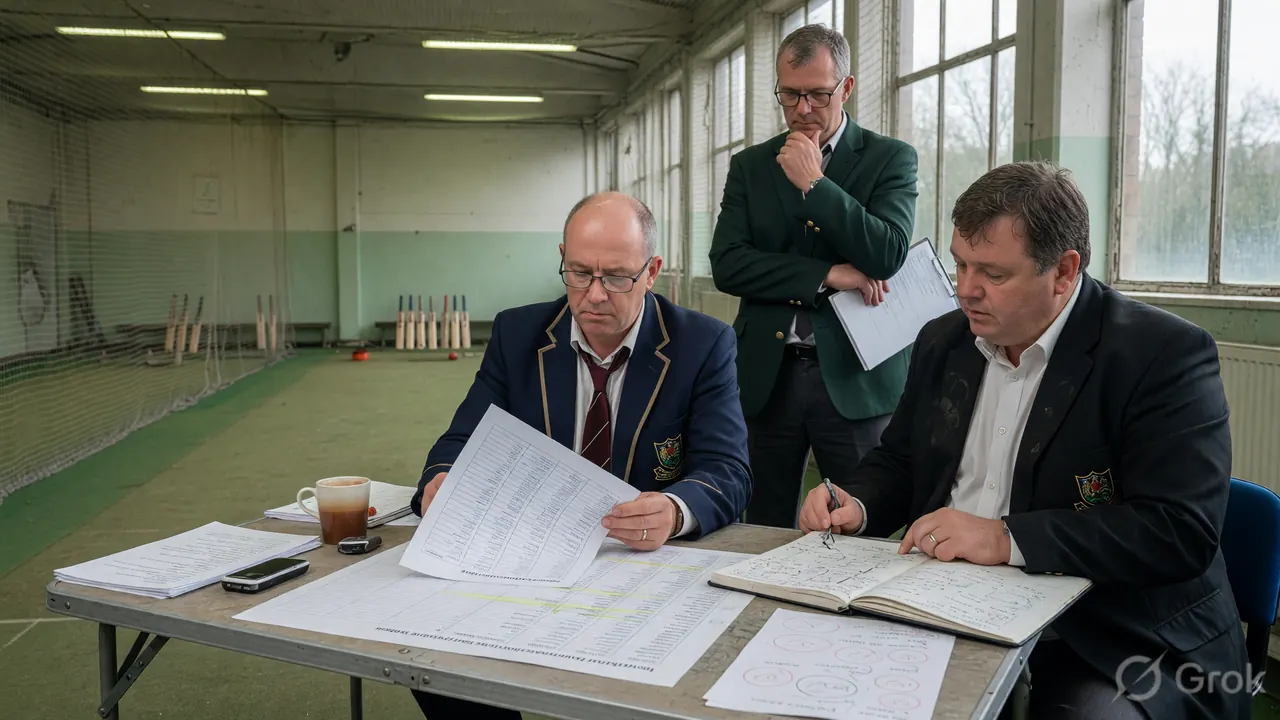
Five reader checks before a cricket player update earns a captain tag
- 1. Which beat is this? Injury return, form shift, milestone, or selection call. The captaincy read follows the beat, not the headline.
- 2. What role has the player been moved into? Role drives fantasy output more than form. A role change is a captaincy read on its own.
- 3. What surface does the next fixture sit on? Surface decides whether the role change compounds or fades across the next two or three matches.
- 4. What is the honest sample size? One innings after an injury return, six to ten for a form shift, one beat for a milestone, one fixture block for a selection call.
- 5. Has the source confirmed the read? An independent feed (selector press note, official scorecard, named journalist) reduces the read’s uncertainty by more than any narrative framing.
What verified sourcing looks like in a player-news read
Three tiers of evidence, ranked by their effect on the read
The first tier is the selector’s own statement. A press note from the board that names the player, the surface, and the role is the strongest single piece of evidence because it sets the role allocation the next fixture will be built around. The captaincy read follows that allocation rather than any independent form narrative.
The second tier is the named journalist’s on-the-record read, particularly when it cites the selector’s room rather than a player’s social post. The third tier is the broadcast clip, which usually compresses the first two and sometimes loses the role or surface detail in the compression. The captaincy read should weight the tiers in that order.
When the three tiers agree, the captaincy read is firm. When they diverge, the read sits closer to the first tier, and the second and third tiers are read as supporting evidence rather than competing claims.
Why a form dip in Tests does not transfer to your T20 captaincy
06Format leakage inflates both edges
The most expensive beat leakage in player-news reading happens across formats. A form dip in Tests is read as if it carries into T20 captaincy; a T20 strike-rate spike is read as if it confirms Test form. Both moves feel intuitive because the player is the same person, but the underlying skill sets are different and the surface profiles are different. A Test dip often reflects a bowler’s length adjustment; a T20 spike often reflects a matchup plan against a single opposition. Reading them on the same ledger produces a captaincy edge that washes out in the second format, and the player-news cycle looks like noise when in fact it was two honest signals being averaged into a fake one.
The fix is to keep a separate form ledger per format. The captaincy read on a multi-format player uses the format ledger that matches the upcoming fixture, and the cross-format signal is treated as supporting context rather than as a substitute for the format-specific ledger.
07Surface drift across a tournament window
Across a tournament window, the same player can move from a seam-friendly surface to a slow turner and back inside three or four matches. The captaincy read that held at the start of the window rarely holds at the end without a recalibration. The honest read is to track the surface profile of the next two or three fixtures and recalibrate the role allocation for each block rather than carry a single read across the full window. The player-news cycle is not a single beat; it is a chain, and the chain has to be re-read at each surface change.
The error mode is to anchor on the first fixture of the window and treat every subsequent beat as confirmation. Confirmation bias in the captaincy read is the most expensive single mistake the framework catches, and it costs more in tournament formats than in bilateral series because the surface rotation is faster.
08Patience as the reading skill
Patience is itself a reading skill, and the framework treats it as such. An injury return needs one or two completed innings before the sample is honest. A form shift needs three or four matches before the trend is visible. A milestone is read once. A squad announcement is read the morning of the next match. Each beat has a different patience window, and the reader who tries to compress those windows into a single decision cycle ends up with a captaincy read that is always one beat behind the news.
The honest read is to set the patience window per beat and wait for it. The captaincy tag that holds across a tournament window is almost always built on patience rather than on speed.
Frequently asked questions
What counts as a cricket player news cycle?
A player news cycle is the chain of updates around one player across injury returns, form shifts, milestones, selection calls, and squad announcements. Treating those beats as the same kind of news is the most common reading mistake. They move at different speeds, rest on different evidence, and produce different captaincy reads.
How is an injury return different from a form update?
An injury return is a medical clearance event with a small sample window after it. A form update is a rolling statistical signal with a six-innings half-life. Conflating the two leads readers to treat a clearance as if it were a form floor, or a form dip as if it were an injury concern.
When is a cricket milestone worth treating as a player-news beat?
A milestone is worth reading when it changes the role the player occupies in the team, not when it changes the headline. A batter crossing a run threshold that locks in a batting position is one beat. A bowler crossing a wicket threshold that does not change role is editorial colour, not a captaincy signal.
How should readers interpret a squad announcement versus a squad change?
A squad announcement is a forward-looking statement about role allocation. A squad change is a reaction to an event such as an injury, a form collapse, or a tactical pivot. Reading an announcement as if it were a reaction, or a reaction as if it were a statement, inverts the evidence and produces the wrong captaincy read.
What is the most common mistake when reading cricket selection news?
Reading selection news as a verdict on the selected player’s quality rather than as a verdict on the matchup plan. Selectors choose for role and surface, not for career-best form. A benching is rarely a downgrade of the player’s ability; it is usually a downgrade of the surface fit.
How long should a reader wait before trusting a fresh cricket player update?
Injury returns take one or two completed innings before the sample is honest. Form shifts need three or four matches before the trend is visible. Milestones are read once. Squad announcements are read the morning of the next match. Patience is itself a reading skill.
Carry the framework into the wider player ledger
→Browse the player database
The COME SPORTS player database tracks active cricket profiles with venue splits, batting position history, recent form curve, ownership percentages across the major fantasy platforms, and an editor-verified fantasy point projection. Use the framework above as the read on each profile rather than as a read on the headline.
→Match Predictions
Match-by-match projections with track records and Brier scores updated through each contest window across the IPL and the international calendar.
→How To Play
The wider strategy library covering captain picks, points system, state-wise eligibility, and live strategy across the IPL and the international calendar.